

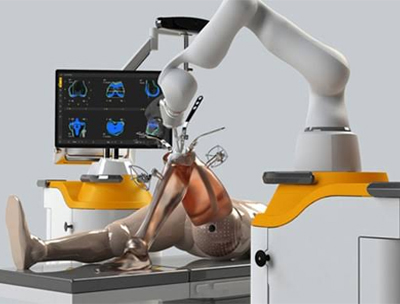
Robotic joint replacement surgery utilizes robotic arms guided by computer software to assist surgeons in performing knee, hip, and other joint replacements. This technique offers enhanced precision, potentially leading to better implant alignment, reduced tissue damage, and faster recovery times.
How it is:
Restoring joint function:A CT scan creates a 3D model of the patient's joint, allowing the surgeon to pre-plan the implant size and placement.
Robotic assistance:The robot provides real-time feedback and guidance during surgery, ensuring precise bone cuts and implant positioning.
Benefits:Robotic surgery can lead to smaller incisions, less blood loss, and potentially faster recovery compared to traditional methods.
Limitations:Robotic surgery may be more expensive, and not all surgeons or hospitals offer it.
Types of robotic joint replacement:
- Knee replacement: Robotic assistance can be used for both partial and total knee replacements.
- Hip replacement: Robotic technology is also employed in hip replacement surgeries.
- Other Joints: Robotic systems are also being developed for other joints like shoulders and ankles.
- Enhanced precision: Robotic systems allow for more accurate implant placement and bone preparation.
- Minimally invasive: Smaller incisions can lead to reduced pain and faster healing.
- Improved outcomes: Better implant alignment can result in improved joint function and longer-lasting results.
- Reduced complications: Robotic assistance may reduce the risk of certain complications associated with traditional surgery.
Key advantages:
- Cost: Robotic surgery can be more expensive than traditional methods.
- Surgeon Training: Robotic surgery requires specialized training and experience for surgeons.
- Availability: Not all hospitals or surgeons offer robotic joint replacement.
- Potential for complications: While generally safer, robotic surgery is not without risk, and complications can still occur.